How to Store Clay in the Classroom
Learn simple tips for storing clay in the classroom to help keep it fresh, wo...
Alert banner message with link


Clay goes through several important stages as it transforms from a soft, workable material into a finished ceramic piece. Understanding what happens at each stage can help you know how to handle your work, when to make changes, and what to expect during drying and firing.
Explore each stage of clay below to see how it changes throughout the ceramic process.
Learning these terms and labeling shelves for greenware and bisque will help students organize a kiln room.
Students need to know these stages of the clay process in order. The 5 stages are:
Wetwork, Leather-hard, and Bone Dry are all GREENWARE. Bisque and Glaze are FIRINGS IN A KILN.
Wet work is when clay is moist and pliable.
Plastic or plasticity is a term used by potters to refer to the malleability of clay.
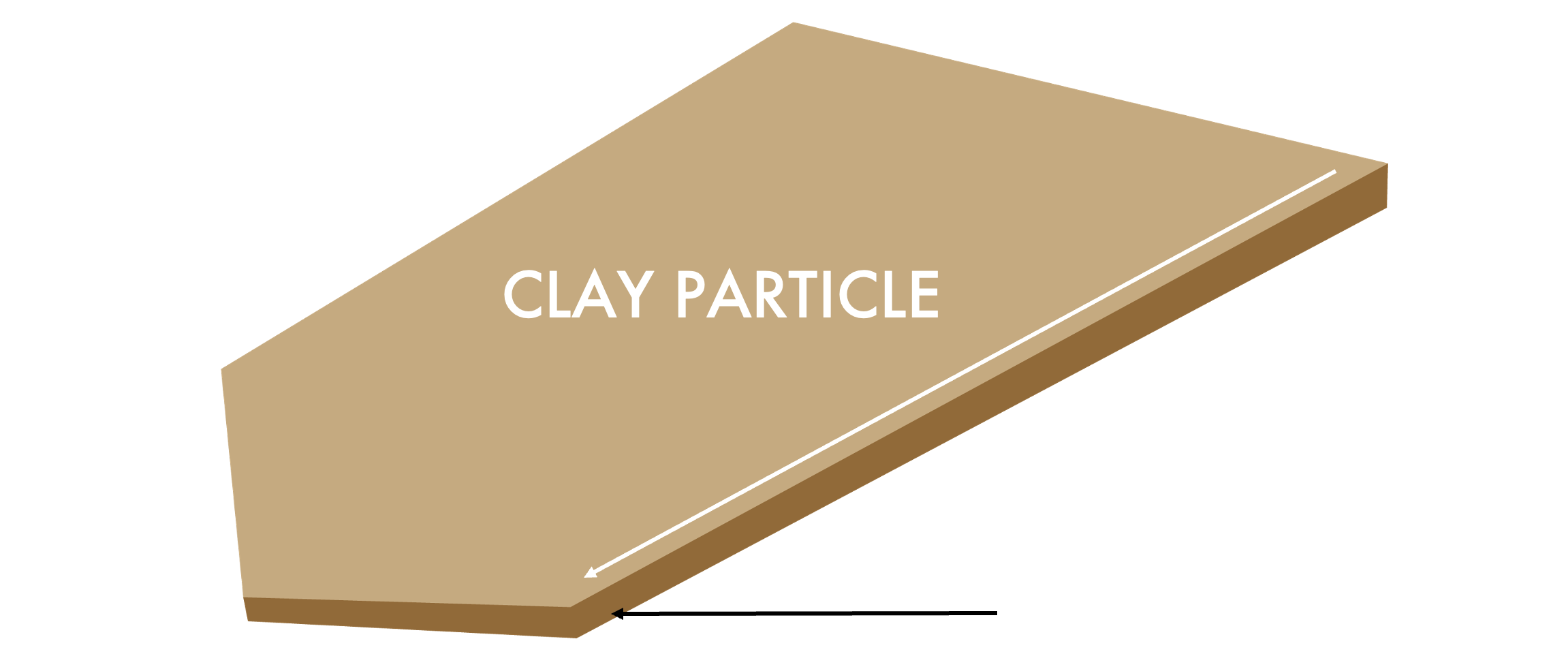
The reason clay is sticky, plastic and malleable is because of this sediment construction. For example, you can’t make a pinch pot from wet beach sand because the particles are a different shape and don’t stick together.
Pictured: Illustration of a clay particle.

In the illustration above, clay particles are stacked like a deck of cards. Clay particles are flat and thin and can trap water particles between them. Water particles act as ball bearings, allowing clay particles to slide and move more easily.
Think about telling a story: You and Harvey go outside to play cards. Heavy rain soaks the table, chair, you, Harvey, and the deck of cards. As you try to separate the individual cards from the soggy deck, the plasticity of clay is illustrated. The water particles trapped between the cards create a slippery adhesion. It is easier to slide them off the top of the deck than to peel them apart.
Leather-hard is the state of clay between wet and dry. Clay still contains moisture and is cool to the touch, but can no longer be formed or impressed with texture. This is the time to:
The term leather-hard comes from leather. A leather belt is stiff enough to hold its shape yet flexible enough to bend.
Bone Dry clay is very brittle and breakable. Warning: the slightest tap can cause a project to break.
Clay shrinks twice, once in the bone-dry stage and again when it’s fired. Clay shrinkage can vary from 5 to 15%, depending on the type of clay and the firing. When firing earthenware in the classroom, shrinkage is usually not noticeable.
Why does clay shrink? The water that acts as ball bearings, making the clay malleable, is now evaporated, and particles move closer together.
Why should students care about shrinkage that is not noticeable in low earthenware firings?
When water within the clay body evaporates at different rates, smaller clay parts--such as handles-- may crack.
Hint: Try wrapping a strip of plastic around the handle to slow the drying.
Side Story: Butch the Roman potter is busy in his studio when summoned by the Commander. The Commander tells Butch that they are going on a campaign to Gaul (a.k.a. France) and they need cups as soon as possible to take with them. Butch goes back to the studio and informs everyone that they urgently need to make 200 cups. To speed up the process, Butch takes the finished cups out to dry in the hot Mediterranean sun only to discover later that all the handles cracked where they attach to the cup. Butch can’t figure out what went wrong. Chuck, a fellow potter, informs him that the cups dried too quickly, causing the handles to shrink away from the body of the cup.

Bisque firing is the first firing. Pottery fired once is called bisque-ware. After pottery is fired, it is rock-hard and has a dry matte finish. It is a good idea to show students an example of bisque-ware.
Projects need to be completely dry before loading into the kiln. Water that remains within the clay body will turn to steam that expands as the clay contracts, causing the work to break during firing.
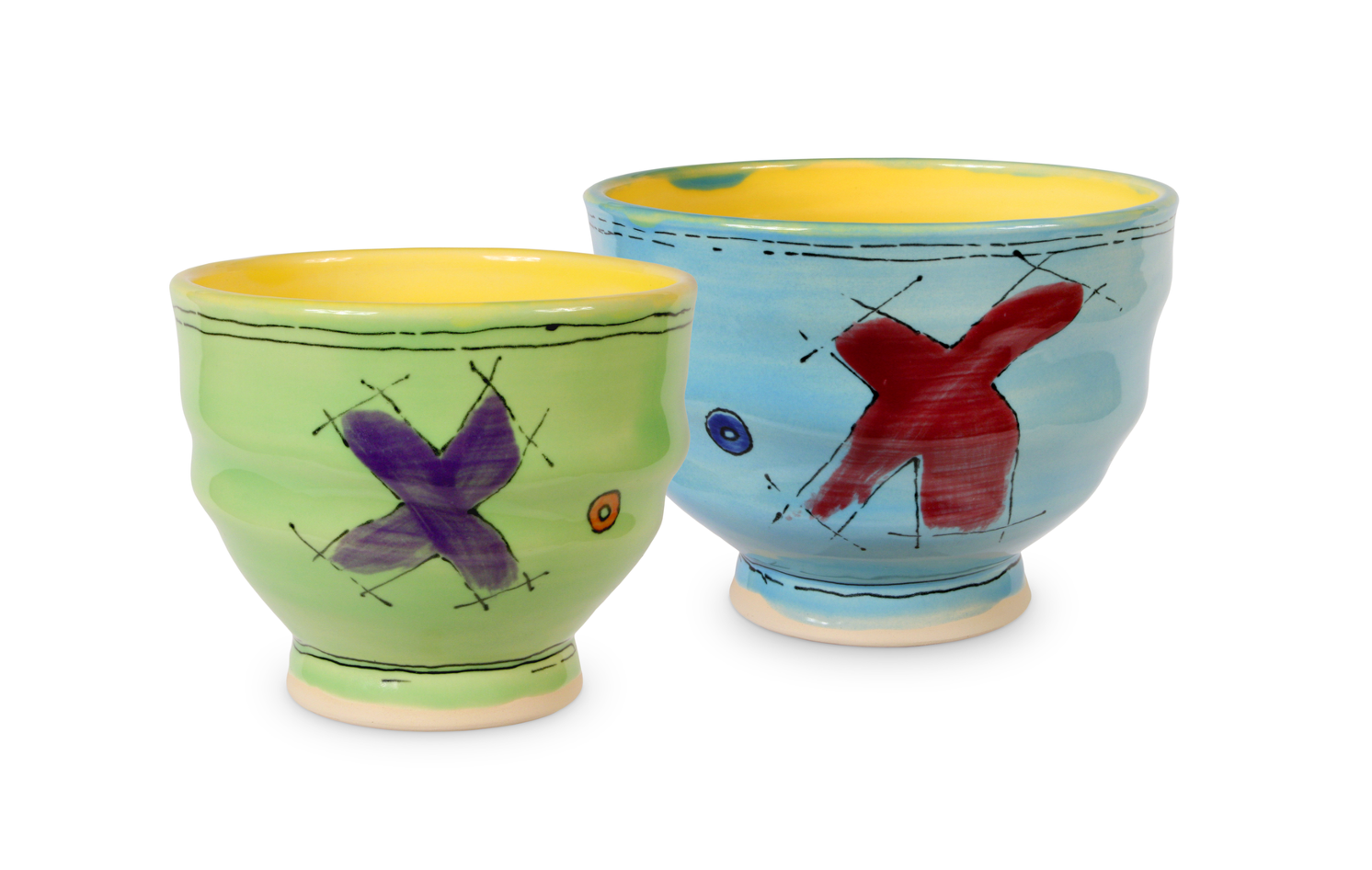
Glaze is a glass-like coating that is brushed onto bisqueware before it is fired a second time.
Glazing pottery makes it water-tight and adds color and beauty.
Clay has a journey—and understanding what happens at each stage can help you get the most out of your work. From shaping and drying to bisque and glaze firing, each step brings your piece closer to its final form.
Learn simple tips for storing clay in the classroom to help keep it fresh, wo...

Lorem ipsum dolor sit amet consectetur. Tristique ultrices libero pellentesqu...
Lorem ipsum dolor sit amet consectetur. Tristique ultrices libero pellentesqu...